
Choosing between a manual, electric and pneumatic valve looks like a choice between three products. It is more accurately a choice between three different ways of supplying the closing force, each of which brings its own requirements for power, control, protection and maintenance. A plant that selects an electric actuator because it is convenient to wire, and then discovers the valve must fail closed on power loss, has not so much chosen the wrong actuator as failed to state the requirement. This article works through the selection method, the specifications that actually differentiate actuators, and the protection ratings that determine whether an installation survives its environment.
Starting from the Operating Requirement
Actuation selection should begin with four questions about the process, not with a preference for one technology.
- How often does the valve move? A manually operated isolation valve may see a few hundred cycles in its life; a modulating control valve may see several per minute. Cycle frequency decides whether an actuator is a convenience or a wear component.
- What must happen on power or air failure? Fail-closed, fail-open, or fail-last-position. This single answer eliminates entire actuator families before any technical comparison begins.
- Is the duty on/off or modulating? On/off service tolerates a simple actuator with end-position control. Modulating service requires positioning resolution and a feedback signal.
- What is the environment? Indoor, washdown, outdoors, or a classified hazardous area. This sets the enclosure protection and whether explosion-proof construction is required.
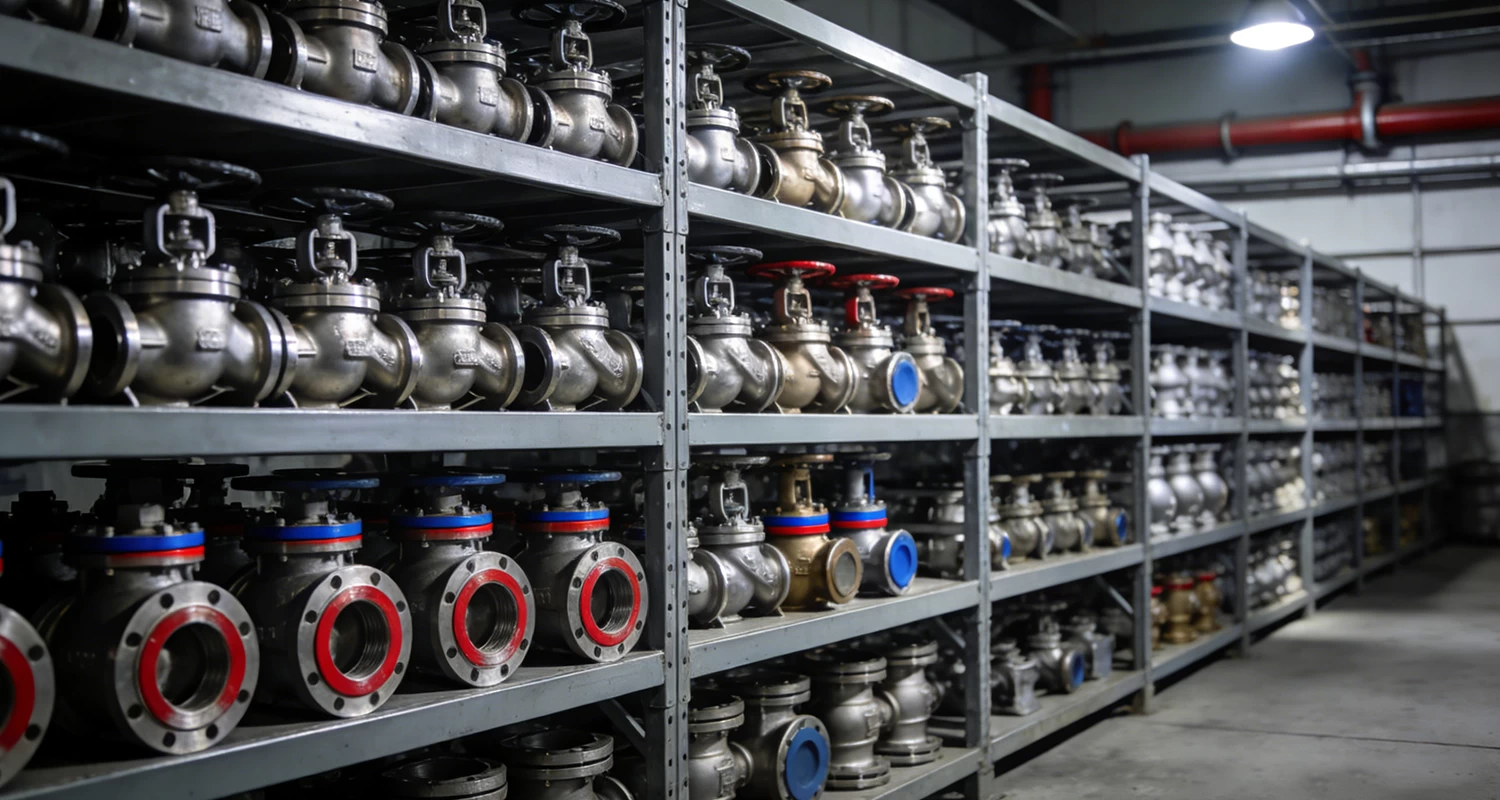
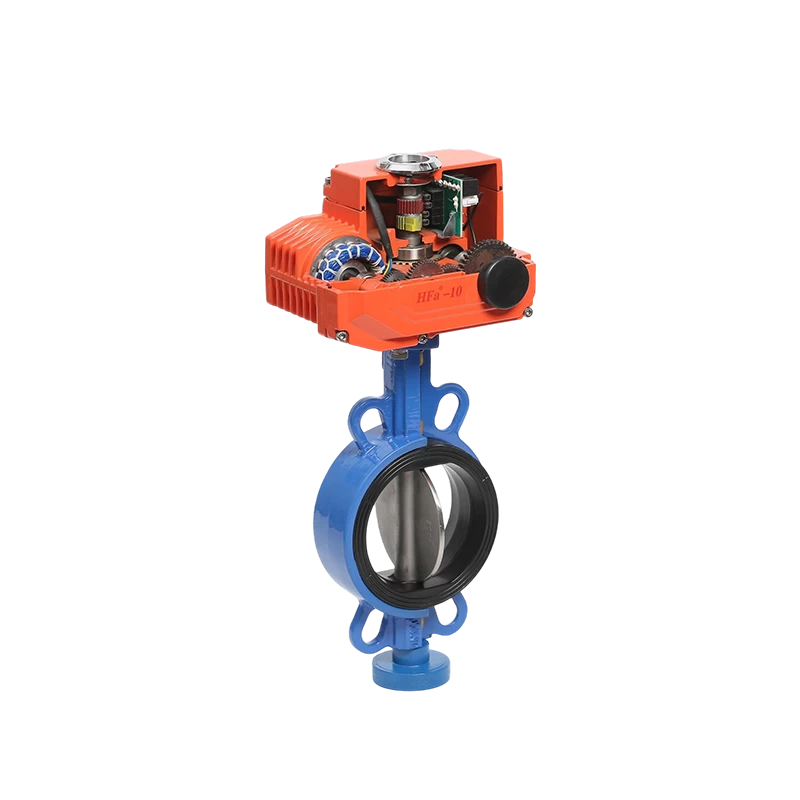
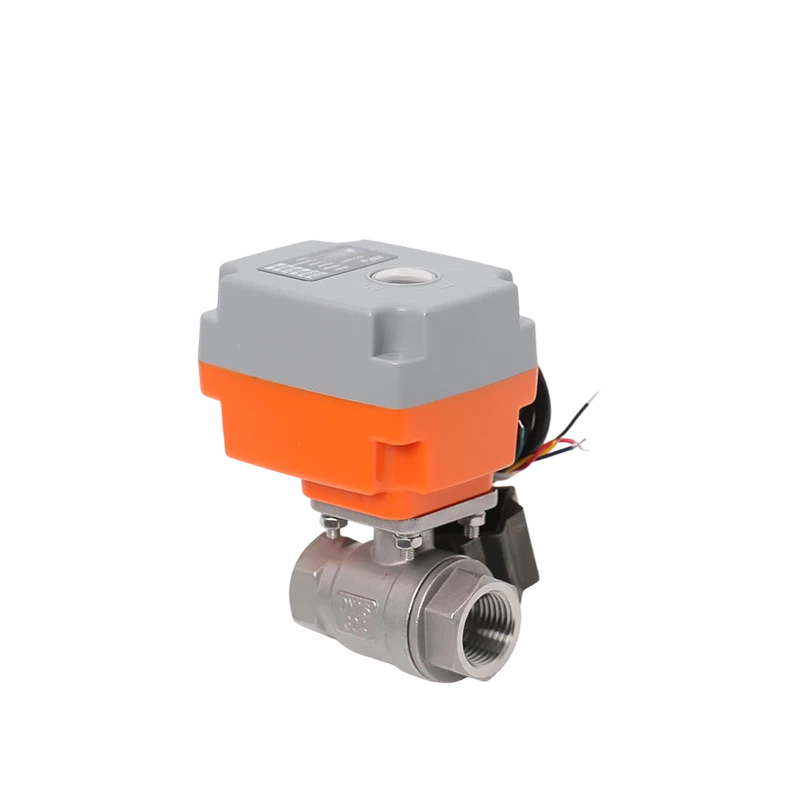
The product range used here spans all three actuation modes, which makes the comparison concrete. Manual valves include the stepping wedge gate valve with concealed stem (DN50–300, PN1.0–2.4 MPa, flange, −10~200°C), the manual threaded ball valve (DN11–94, PN1.6 MPa) and the manual latching butterfly valve (DN50–500, PN1.0–1.6 MPa, wafer). Electrically actuated products include the sanitary electric ball valve (DN15–57, −20~180°C), the electric miniature 304 ball valve (DN8–25), the electric wafer-type butterfly valve (DN25–80) and the electric PVC three-way ball valve (DN15–50). Pneumatic products are the pneumatic flanged ball valve (DN15–400, PN1.0–4.0 MPa, −20~200°C) and the pneumatic stainless steel fluoroplastic butterfly valve (DN50–1200, PN0.6–2.5 MPa).
Comparing the Three Actuation Modes
| Criterion | Manual | Electric | Pneumatic |
|---|---|---|---|
| Force source | Operator | Electric motor | Compressed air |
| Infrastructure required | None | Power supply and control wiring | Compressed air supply and solenoid control |
| Speed of operation | Seconds, operator dependent | Seconds, repeatable | Fastest, typically well under a second |
| Positioning for modulating duty | Not applicable | Good, with feedback signal | Good, with positioner |
| Behaviour on power / air loss | Unaffected | Requires spring-return option to fail safe | Single-acting fails to spring position; double-acting holds last position |
| Best fit | Isolation, low cycle count | Remote and automated duty where wiring is available | High-cycle and fail-safe duty where air is available |
| Typical limitation | Not automatable; operator access needed | Dependent on power continuity | Dependent on air supply quality and continuity |
The behavioural difference on failure is the criterion that most often decides a project, and it maps directly onto a specification term. On the pneumatic flanged ball valve, the control mode is stated as single-acting or double-acting. A single-acting (spring-return) actuator drives the valve one way with air and returns it with a spring when air is lost, so it achieves fail-safe behaviour without electrical assistance. A double-acting actuator requires air to move in both directions and therefore holds its last position when air is lost — which is the correct choice when the process requires the valve to stay where it was, and the wrong choice when it must fail closed.
On electric actuators the equivalent term is spring return, and when it is absent the valve simply stops where it is on power loss. The sanitary electric ball valve and the electric miniature 304 ball valve both state a control method of on-off type or modulating type, which is the electric counterpart of the on/off versus positioning distinction. Reading that phrase carefully before ordering avoids a common mismatch, since a valve quoted as on-off cannot be upgraded to modulating by adding a controller.
Power, Voltage and Control Interface
For electric actuation the voltage is not a free choice — it is set by what the site can supply, and the range offered reflects that flexibility. Across the electric products in this range the options are AC220V, AC380V, DC12V and DC24V. Three practical consequences follow.
- DC supplies suit distributed and low-power installations. The electric miniature 304 ball valve is specifically described as low power consumption with high torque, with battery-powered operation available — a combination intended for locations where a mains feed is impractical, such as field irrigation and remote sampling points.
- AC supplies suit plant wiring. AC220V and AC380V cover the standard industrial case where the actuator is fed from a local distribution board.
- Control type must be matched to the controller. On/off actuators are commanded by a contact closure. Modulating actuators require an analog command and provide position feedback. Where a valve is to be integrated into an existing control system, the interface type should be confirmed against that system before the order is placed.
For pneumatic actuation the corresponding decisions are air pressure and valve configuration. A double-acting actuator consumes air on both strokes, so the compressor capacity and the tubing diameter must be sized for the larger of the two directions, and the solenoid valve must be configured for five-port operation. A single-acting actuator consumes air on one stroke only, reducing air demand at the cost of a spring that must be sized to overcome the valve torque at the worst-case differential pressure.
Protection Ratings and Hazardous Areas
Enclosure protection is where an otherwise sound selection is most often undone, because it is the specification most likely to be omitted from a quotation that looks complete on price.
| Rating | Meaning in practice | Where offered |
|---|---|---|
| IP67 | Dust tight; protected against temporary immersion | Standard on the sanitary electric ball valve, the miniature electric ball valve and the electric wafer butterfly valve |
| IP68 | Protected against continuous immersion under defined conditions | Optional on the same three products |
| Exd IIB T4 Gb | Flameproof enclosure for gas groups up to IIB, temperature class T4 | Optional on the miniature electric ball valve and the electric wafer butterfly valve |
| Exd IIC T4 Gb | Flameproof enclosure for the higher-hazard IIC gas group | Optional on the sanitary electric ball valve |
Two details in that table deserve emphasis. First, IIC is a wider gas group than IIB. Hydrogen and acetylene fall within IIC, so a hazardous-area specification that names those gases cannot be met by an IIB actuator. Second, the T4 temperature class caps the surface temperature of the enclosure at a level that must be compared against the auto-ignition temperature of the gas present, not against the process temperature — a distinction that matters in solvent-handling plants. Both ratings appear here as options rather than standard, which means they must be requested explicitly and will affect both lead time and cost.
For washdown rather than hazardous areas the equivalent consideration is the process medium rather than the gas group. A sanitary valve in a CIP circuit is cleaned with hot caustic and acid at pressure, so the requirement is a high IP rating plus body and seat materials that tolerate the cleaning chemicals — which is why the sanitary ball valve combines 304/316/316L construction and PTFE sealing with an IP67 standard rating and IP68 as an option.
Specifying Actuation Without Creating Problems
Three interface issues account for a large share of commissioning problems on automated valves, and all three can be eliminated at the specification stage.
- Torque margin. The actuator must develop sufficient torque to seat the valve at the worst-case differential pressure and the highest expected temperature, with margin for seat friction as the valve ages. Quoting an actuator on the basis of a new valve at ambient temperature leaves no margin for either.
- Cycle time versus line dynamics. A pneumatic actuator that closes in a fraction of a second can generate a pressure surge in the line. Where surge is a concern, the actuator's speed must be controlled, not maximised.
- Mounting interface standard. The actuator-to-valve mounting pattern and stem coupling are product-specific. A replacement actuator from a different source may require an adapter, and a mismatched stem coupling produces the stem side loads that damage seats.
The general principle connects back to the other engineering notes in this series. Actuation is not a bolt-on to the valve; it defines the closing force that the seat experiences, the speed at which the medium is stopped, and whether the valve remains in the correct position when the plant loses power or air. Specifying it after the valve has been chosen produces a system that works on the bench and surprises the operator at the first unplanned shutdown.
Read together with the material selection and sealing notes, this gives a complete specification sequence: define the medium and temperature to fix the body and seat materials, define the required leakage class to fix the sealing construction, and only then define cycle frequency, failure behaviour and environment to fix the actuation and protection. Each stage constrains the next, and skipping a stage produces a valve that meets the letter of the order and not the intent of the process.